

American Senior Housing Credit Fund (ASC)
Private Investment Offering for Accredited Investors
Offering Overview
8787 Renner Blvd, Suite 130
Lenexa KS, 66219
913.283.7804
Team@SLFinvestments.com
Table of Contents
(select item to jump through document)
Company.
SLF Investments (SLF) provides accredited individuals the opportunity to participate in a growing sector that is both financially and personally rewarding. Our investment offerings provide accredited investors options for recurring income, equity growth, tax benefits, and deferral options. Those participating will join a community of investors that are making an impact in supporting elders and caregivers within investment communities around the nation.
Executive Summary
Structured Private Credit Backed by U.S. Senior Housing Cash Flow
American Senior Housing Credit Fund (ASC) provides accredited investors access to a senior housing private credit strategy built around stabilized, income-producing properties. ASH seeks to originate secured loans supported by operating senior housing assets, with repayment tied to borrower payments, property cash flow, refinancings or asset sales. ASC is structured around Payment Dependent Notes. Three participation levels allow accredited investors to choose between higher payment priority or higher stated return potential depending on their risk-return preferences. Each participation level (Senior, Mezzanine, and Junior) carries different LTV ranges, anticipated return profiles, payment priority, and projected investment timelines. ASC is designed to emphasize capital preservation, recurring property-level cash flow, disciplined underwriting, and defined repayment hierarchy. Rather than relying primarily on speculative appreciation or ground-up development, ASH seeks to lend against senior housing assets where operating performance, collateral value, and exit pathways can be evaluated before capital is ever deployed.
Designed For Investors Seeking:
Profit Participation
Recurring Fixed Income
Asset Level Isolation
Portfolio Diversification
Priority Positioning
Support of Social Cause
Stabilized Asset Strategy
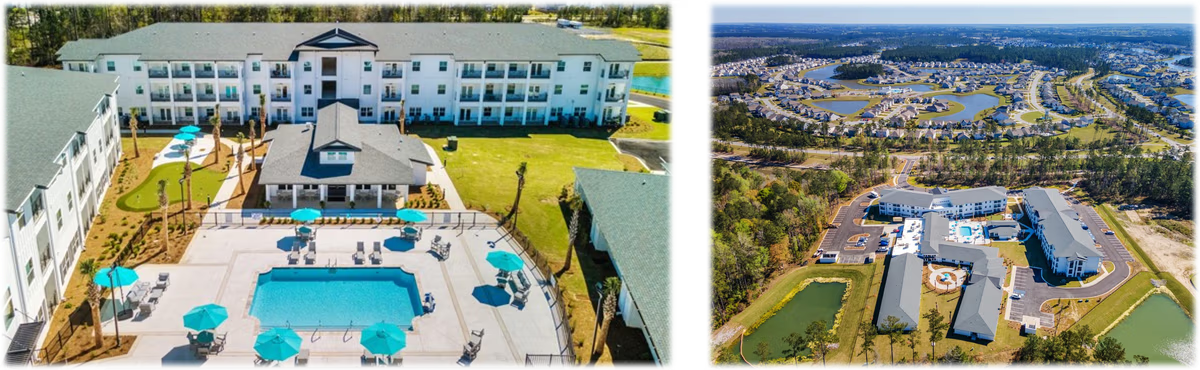
Focused on Stabilized, Operating Properties
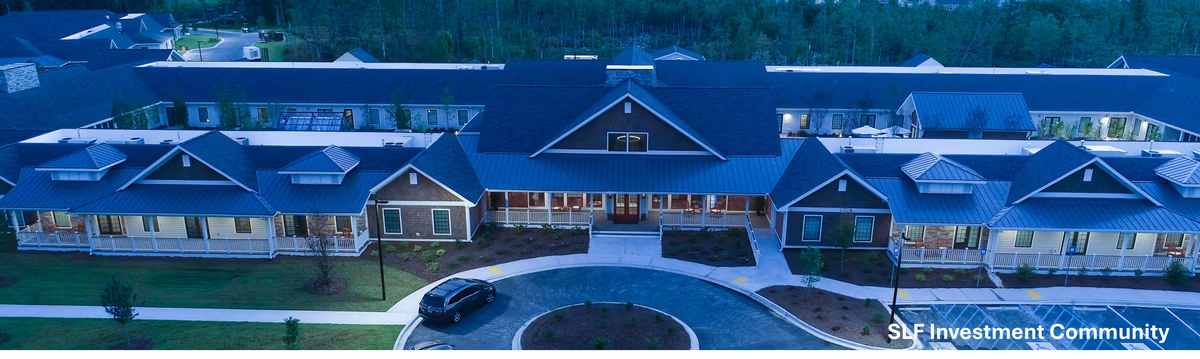
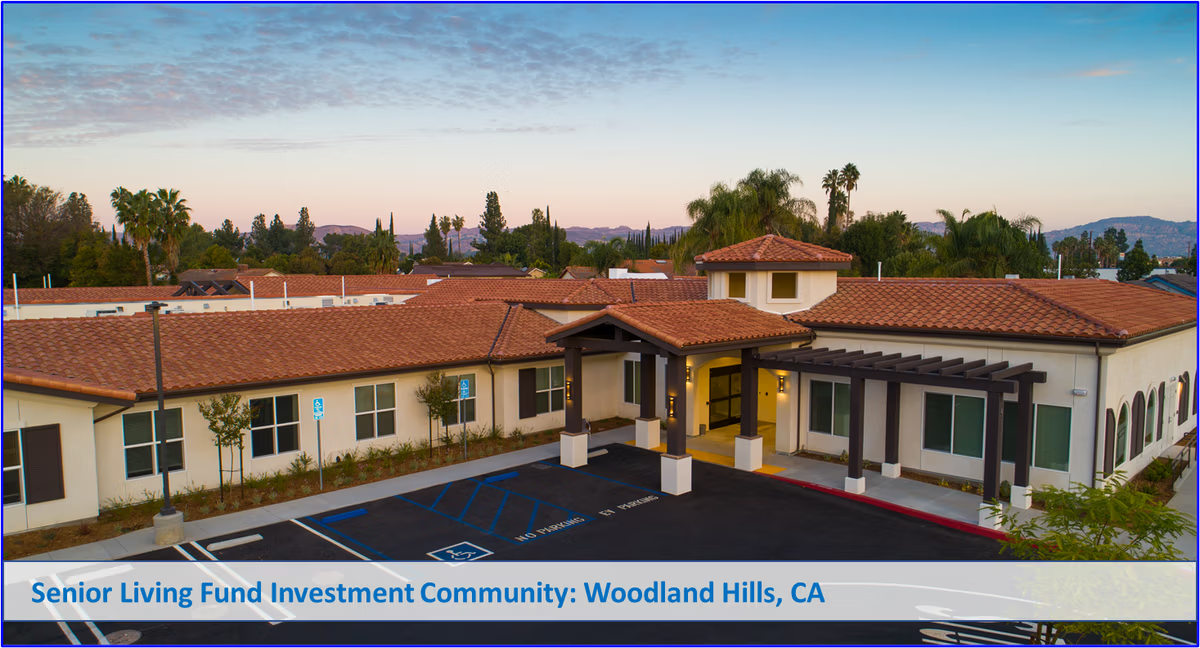
ASC focuses primarily on operating senior housing properties with existing cash flow, measurable occupancy, and historical performance. All investment projects must meet a rigid underwriting criteria, achieving 12-month operating history benchmarks.
12-Month Operational Benchmark Minimums:

Average ongoing occupancy 80%+

Expense ratios <80%

NOI ratio >20%
Why This Matters
ASC is not designed to rely on unproven lease-up, speculative development, or future appreciation alone. By focusing on stabilized operating properties, the Fund seeks to evaluate each opportunity based on existing performance, observable cash flow, and measurable operating history before capital is deployed.
Asset & Capital Structure
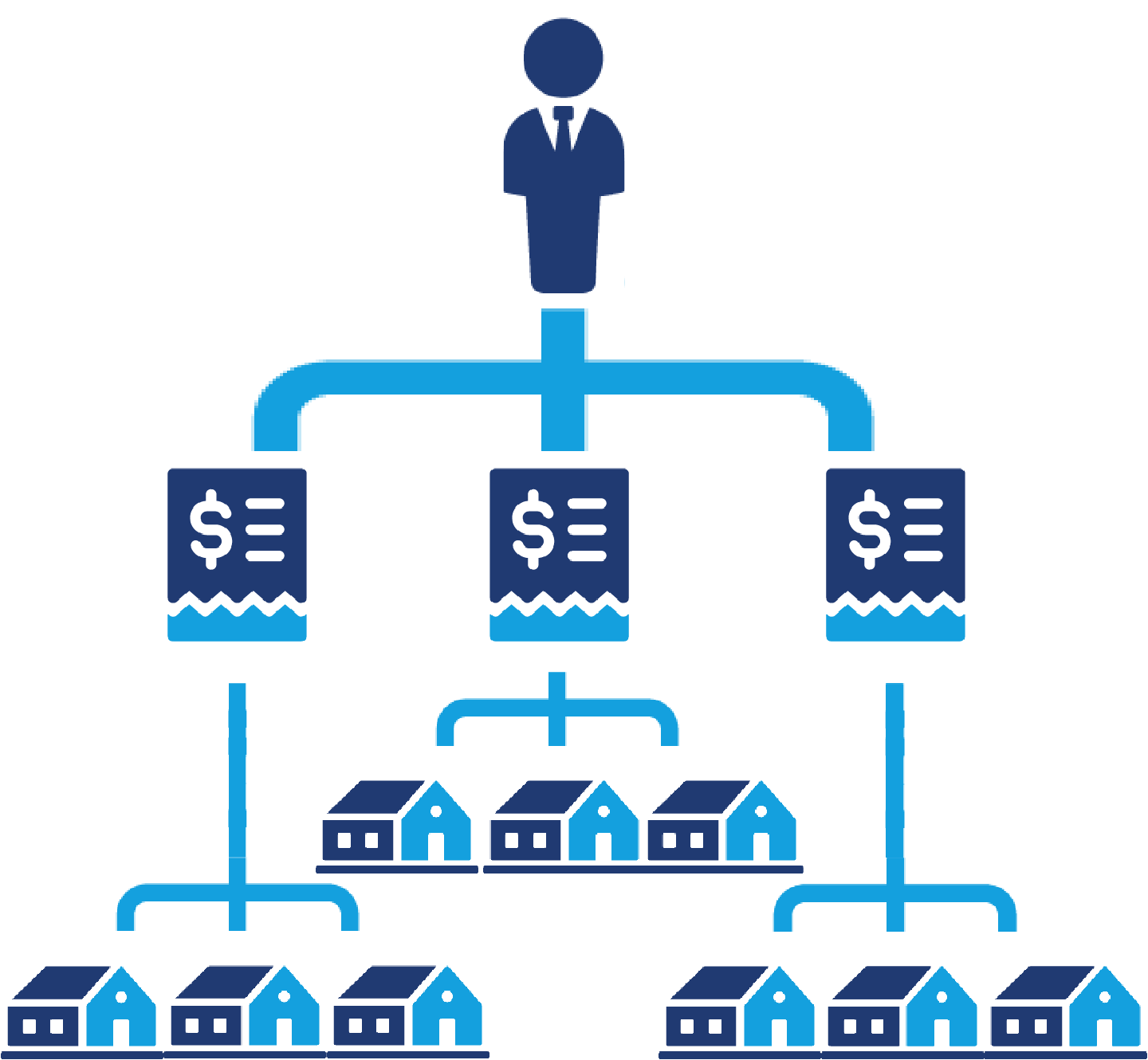
ASH originates secured loans backed by senior housing assets. Investors do not have direct ownership, participation, or security interest in the underlying secured loan or collateral. Instead, each note is a payment-dependent obligation of ASH, tied to receipt of payments from the applicable underlying secured loans.
How It Works:

1
Investor Participates in ASC
Investor subscribes to the Fund and selects a participation level.

2
Investor Receives Payment Dependent Note
The note defines the investor’s stated return, payment priority, and repayment terms.

3
ASC Issues Secured Loans to Cash-Flowing Properties
Loans supported by collateral and operating performance.

4
Borrower Payments Flow Back to ASC
Repayment expected from borrower payments, operating cash flow, refinance, asset sale, or secondary transfer.

5
ASC Distributes Available Collections by Priority
Available collections distributed according to note level and payment waterfall.
What Investors Own
ASC is not designed to rely on unproven lease-up, speculative development, or future appreciation alone. By focusing on stabilized operating properties, the Fund seeks to evaluate each opportunity based on existing performance, observable cash flow, and measurable operating history before capital is deployed.
What Supports Repayment
Senior Housing + Healthcare. Feel Good About Where You Invest!
Asset-Level Isolation
Providing investors choice and visibility into capital allocation and repayment.
A core feature of ASH is its asset-level structure. Investor proceeds may be allocated to one or more specific underlying secured loans, and payments are determined on a loan-by-loan basis rather than broadly pooled across all Fund assets. This structure is designed to allow more clear visibility into the loans supporting each investor’s note, the collateral tied to those loans, and the repayment activity associated with each allocation.

Why Investors Value Asset-Level Isolation:
Greater Visibility
Investors better understand which underlying loans are associated with their note.
Defined Repayment Tracking
Payment activity evaluated on performance of applicable underlying loan allocation.
Lowered Cross-Asset Ambiguity
Structured to limit reliance on broad pooled performance across unrelated assets.
Risk Positioning Visibility
Investor’s participation level, payment priority, and repayment pathway can be
evaluated in relation to the specific underlying loan structure.
Choose Your Position in the Capital Stack
Three Participation Levels: Senior, Mezzanine, and Junior.
Payment priority not implied - defined by participation level.
ASC offers three participation levels, allowing investors to select the risk-return profile that best aligns with their objectives. Each level corresponds to a different LTV band and payment priority.
Where you sit in the capital stack matters.
-
LEVEL 1: SENIOR
Level 1 investors generally participate in the lower-LTV portion of the loan structure and are paid before Level 2 and Level 3 investors.
-
LEVEL 2: MEZZANINE
Level 2 investors accept a subordinate position for a higher stated rate.
-
LEVEL 3: JUNIOR
Level 3 investors accept a junior position and longer expected hold periods in exchange for the highest potential stated return.
Higher priority generally means lower stated yield. Higher stated yield generally means greater subordination and longer duration.
Interest Coverage & Cash Flow Buffer
Cash Flow Buffer Before Payment Impairment
Property-Level NOI
Required Interest Obligation
Coverage Cushion
Coverage Margin Objective
ASC intends to underwrite loans so that stabilized property-level NOI exceeds
investor interest obligations by a defined margin. This residual cushion is intended
to help absorb moderate fluctuations in occupancy, expenses, or revenue before
scheduled interest payments are impaired.
This structure is designed to allow more clear visibility into the loans supporting
each investor’s note, the collateral tied to those loans, and the repayment activity
associated with each allocation.
First Line of Defense:
ASC’s repayment framework begins with operating cash flow. Before relying on refinancing or sale proceeds, we evaluate whether the underlying property’s stabilized NOI is expected to support contractual interest obligations with a margin of safety.
Second Line of Defense:
Should operating performance change, ASC may continue to evaluate borrower collections, collateral value, refinance availability, sale prospects, and other exit alternatives before final repayment timing is determined.

HUD Refinance & Exit Structure
Why HUD Matters
HUD-insured financing may provide a long-term, fixed-rate refinance path. Because
HUD financing is typically focused on stabilized, income-producing healthcare and
senior housing assets, refinance eligibility is considered during underwriting and
exit analysis.
This is especially relevant for Senior and Mezzanine note levels, where the anticipated
repayment pathway is generally tied to a five-year HUD refinance.
For a substantial portion of ASC’s loans, repayment at or before maturity is expected
to be achieved through the borrower’s ability to obtain long-term, fixed-rate financing
through HUD programs, particularly Section 232 of the National Housing Act. HUD
take-out financing is also a key underwriting consideration.

Operating Senior Housing Asset

HUD Eligibility & Underwriting Review
Senior / Mezzanine Notes
Junior Notes
Target 5-Year HUD Refinance Repayment
Asset Sale / Secondary Transfer / Longer Hold
Exit Timeline Overview
Different levels. Different timelines. Different repayment pathways.
Repayment timing, priority, and size varies by note level. This is because each level
occupies a different position in the capital stack. Senior and Mezzanine notes are
generally structured around a shorter anticipated repayment timeline, while Junior
notes generally involve a longer duration and greater reliance on asset-level exit
execution.
Level 1 and Level 2 notes generally target a five-year timeline, with anticipated
repayment through refinancing of the underlying secured loan. Level 3 notes
generally target a longer seven-to-ten-year timeline, with repayment anticipated
through asset sale, refinancing, or secondary transfer.

Years 0-1:
Origination, deployment, borrower/property underwriting.

Years 1-5:
Current pay period, asset monitoring, performance reporting.

Year 5:
Target Senior/Mezzanine refinance takeout where applicable.

Years 7-10:
Junior exit through sale, refinance, or secondary transfer.

Extension Period:
Up to 2 additional years if needed to continue receiving/remitting collections.
Multiple Repayment Pathways
ASC underwrites each loan with identified repayment sources before capital is deployed.
ASC is structured to evaluate repayment through multiple potential pathways. While
current payments are expected to be supported primarily by borrower payments and
property-level cash flow, final repayment may depend on refinancing, sale proceeds,
secondary transfer, or continued collections from the applicable underlying secured
loan.
Multiple Exit Pathways
Operating Cash Flow
Recurring property-level NOI may support ongoing borrower payments.
HUD Refinance
Qualified assets may pursue long-term take-out financing.
Asset Sale:
Sale proceeds may support repayment where refinancing is unavailable or
unattractive.
Secondary Transfer
ASC may evaluate transfer opportunities for certain positions or loan interests.
Our Team.
The Senior Living Fund team is comprised of industry, securities, financial, and investment experts, as well as support personnel, based primarily in the Kansas City metropolitan area.
SLF Executive Team.

Dan Brewer, Founder & Chief Fund Manager
Dan has 30+ years of business experience, including 25+ years as an executive and principal in real estate, capital placement, business development and management. Dan has 10+ years of experience in a business consulting and management role for Accenture. Dan also has 10+ years of experience in the senior housing sector.

Mark Shader, Chief Operating Officer
Mark brings strong operations management skills to the SLF team through his 30+ years of experience in business consulting, real estate investment and development, financial analysis and management. Mark currently serves as Chief Operations Officer for Senior Living Fund, LLC and its affiliated entities.

Rick Maner, Chief Financial Officer
Rick brings over 30 years of financial management experience, mostly focused on financial services industry. Rick oversees all of the accounting operations including financial reporting, cash planning, and managing external audit relationships and the Funds tax reporting.