
Senior Living Rent Increases By 3% To 7% In The Coming Year

The senior housing market is entering a phase of significant adjustment as senior living rent increases are projected to range from 3% to 7% over the next year. These changes are influenced by higher operational costs, rising demand for quality senior housing, and limited new development across many regions. Understanding these trends is important for […]
17 Quarters and Counting: Senior Housing’s Unstoppable Occupancy Growth
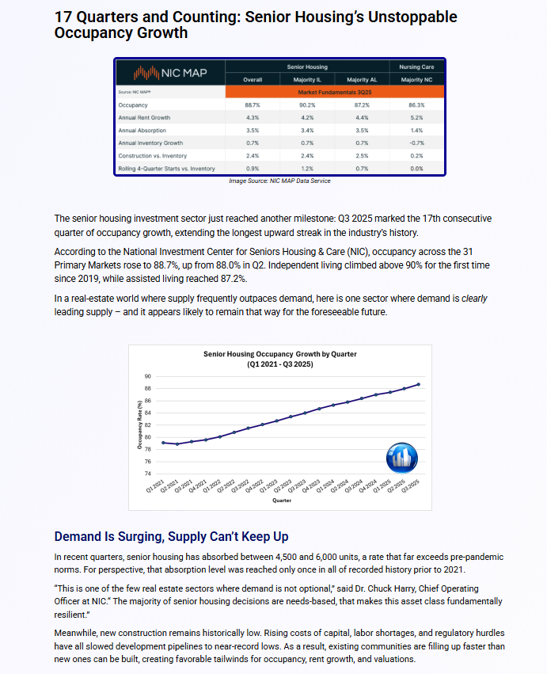
The senior housing investment sector just reached another milestone: Q3 2025 marked the 17th consecutive quarter of occupancy growth, extending the longest upward streak in the industry’s history.
According to the National Investment Center for Seniors Housing & Care (NIC), occupancy across the 31 Primary Markets rose to 88.7%, up from 88.0% in Q2. Independent living climbed above 90% for the first time since 2019, while assisted living reached 87.2%.
In a real-estate world where supply frequently outpaces demand, here is one sector where demand is clearly leading supply – and it appears likely to remain that way for the foreseeable future.
Senior Housing Cap Rates: Trends & Implications
In Q3 2025, cap rates remain a central focus for senior housing investors. The capitalization rate, or cap rate, reflects the ratio of a property’s net operating income to its purchase price and serves as a proxy for yield. Because senior housing is an operationally intensive asset class with unique demographics and care requirements, its cap rates have historically run higher than other real‑estate sectors. Today, the sector offers some of the highest absolute yields in commercial real estate, even as cap rates have been tightening.