

Monthly Investment Newsletter - March 2026
A Stronger Market, Not an Easier One
Senior housing investment has spent the last several years rebuilding momentum. Occupancy has continued to rise, supply remains constrained, and capital has started to return to the sector in a more meaningful way. Valuations recovered by more than 10% in 2025 as capitalization rates compressed by 25 to 50 basis points.
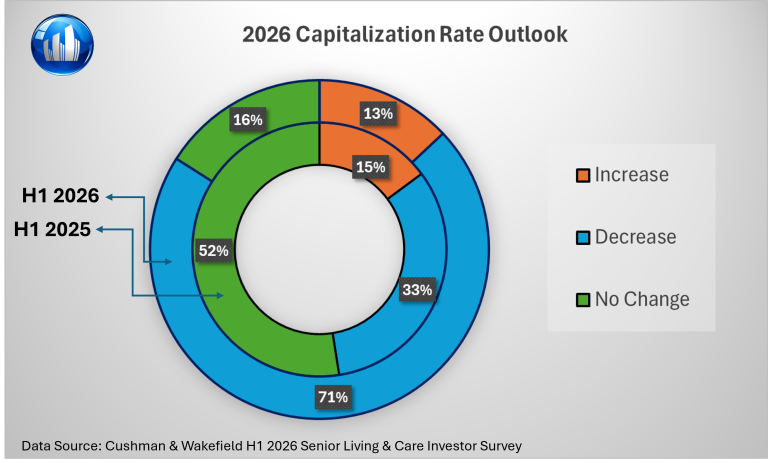
This combination created an unusually wide window where improving property performance and capital market dislocation existed at the same time. Today, that window appears to be narrowing. The reason is not just that property-level fundamentals have improved, but that investor sentiment toward pricing is improving as well. The chart below helps illustrate that shift. Expectations for cap rate movement have changed meaningfully over the past year, signaling that more market participants believe valuations have stabilized and that the sector is entering a more competitive phase.
When markets are dislocated, broad exposure to a recovering sector can do a lot of the heavy lifting. When markets begin to normalize, the advantage tends to shift toward those who can identify the best operators, the right assets, and the most durable operating models. Senior housing appears to be entering that phase now.
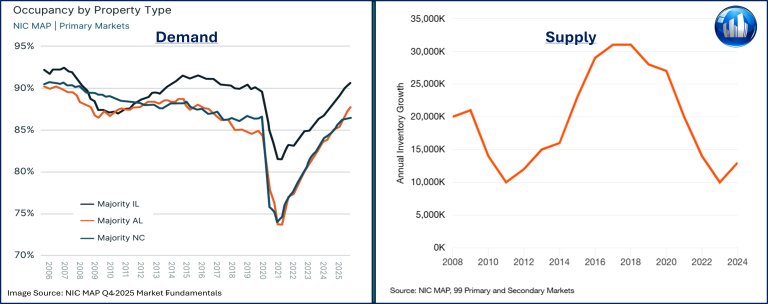
The underlying fundamentals remain compelling. NIC MAP reported that overall senior housing occupancy reached 89.1% in the fourth quarter of 2025, with independent living at 90.6% and assisted living at 87.7%. Annual inventory growth was just 0.6%, while construction sat at only 2.3% of inventory.
Stronger fundamentals do not mean easier investing. As capital flows back into the space and pricing becomes more competitive, investors have less room for underwriting mistakes. It is helpful to look at not only where the market expects valuations to go, but also what could still disrupt that recovery. Cushman’s H1 2026 investor survey found that labor was viewed as the greatest risk to valuations over the next 12 months by 37% of respondents, making it the top concern in the sector.
Senior housing is becoming more attractive, but not necessarily more forgiving. Confidence is returning, yet performance is still likely to depend heavily on execution.
Labor is especially important because senior housing is not just a real estate story. It is an operating business embedded within real estate. A property can benefit from rising occupancy and favorable supply-demand trends, but margins can still be pressured if staffing models are inefficient, wage pressure is poorly managed, or service delivery is inconsistent.
Communities with stronger operators, better retention, and tighter cost controls should be positioned to protect NOI more effectively than those relying solely on market tailwinds.
Operational Example: Las Vegas, NV
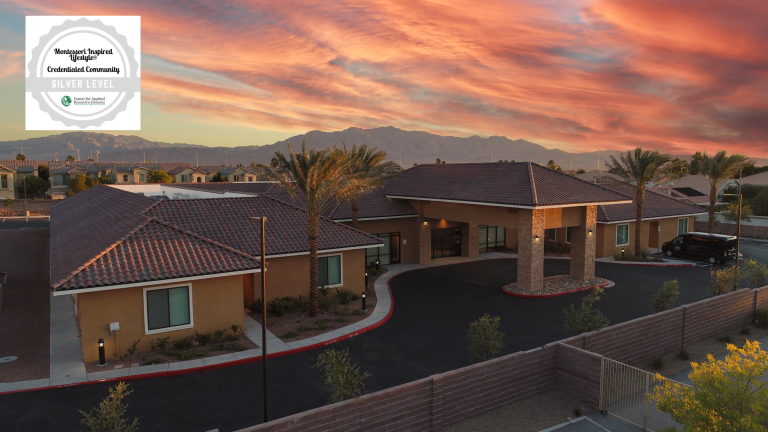
Grand Montecito Memory Care is a 46-unit purpose-built memory care community in Las Vegas – and a flagship example of how inspired leadership transforms performance.
In Q4 2024, after a period of elevated turnover, we recruited a new Executive Director to restore the identity and performance of this senior housing investment community. The new Executive Director revitalized resident-centric programming, stabilizing staffing, and rebuilt community trust – all in less than 6-months. By Q2 2025, a new hand-picked leadership team was fully in place, and enhanced training protocols as well as streamlined workflows had driven net operating income significantly higher.
By Q4 2025 the community reached 100% occupancy, improved NOI consistently, and was awarded a silver credential by the Center for Applied Research in Dementia
At SLF Investments, we believe this next stage of the senior housing cycle reinforces the importance of careful sponsor selection, operator alignment, and active asset management. A stronger market is a positive development, but it also raises the bar. As capital returns and pricing improves, execution becomes the differentiator.
SLF Investments (SLF) is a private equity investment company with 20+ assets under management that generated ~$100 million in revenues during 2025. If you would like to hear about our current offerings, contact our investor relations team today!
How to Participate.
Senior Living Fund has five (5) investment offerings for accredited investors:
SLF Value-Add Fund 1 - (SLF VAF 1)
- Anticipated 4.5-5 Year Term
- Annual Accrual + Profit Participation
- 12.00% to 21.00% Projected Fund IRR
SLF Value-Add Fund 2 - (SLF VAF 2)
- Anticipated 4.5-5 year term
- Monthly Distributions + Profit Participation
- 10.50% to 20.00% Projected Fund IRR
F4 Fixed Note Offering
- Anticipated 3 Year Term
- Monthly Distributions
- Fixed Interest Rate Equal to 15% Per Annum
F5 Fixed Note Offering
- Anticipated 3 Year Term
- Monthly Distributions
- Fixed Interest Rate Equal to 15% Per Annum
F6 Fixed Note Offering
- Anticipated 3 year term
- Monthly Distributions
- Fixed Interest Rate Equal to 15% Per Annum
Interested in investing? Contact our Investor Relations Team today!
Team@seniorlivingfund.com | 913.283.7804
Our Team.
The Senior Living Fund investment team is comprised of industry, securities, financial, and investment experts, as well as support personnel, based primarily in the Kansas City metropolitan area.
SLF Executive Team.

Dan Brewer, Founder & Chief Fund Manager
Dan has 30+ years of business experience, including 25+ years as an executive and principal in real estate, capital placement, business development and management. Dan has 10+ years of experience in a business consulting and management role for Accenture. Dan also has 10+ years of experience in the senior housing sector.

Mark Shader, Chief Operating Officer
Mark brings strong operations management skills to the SLF team through his 30+ years of experience in business consulting, real estate investment and development, financial analysis and management. Mark currently serves as Chief Operations Officer for Senior Living Fund, LLC and its affiliated entities.
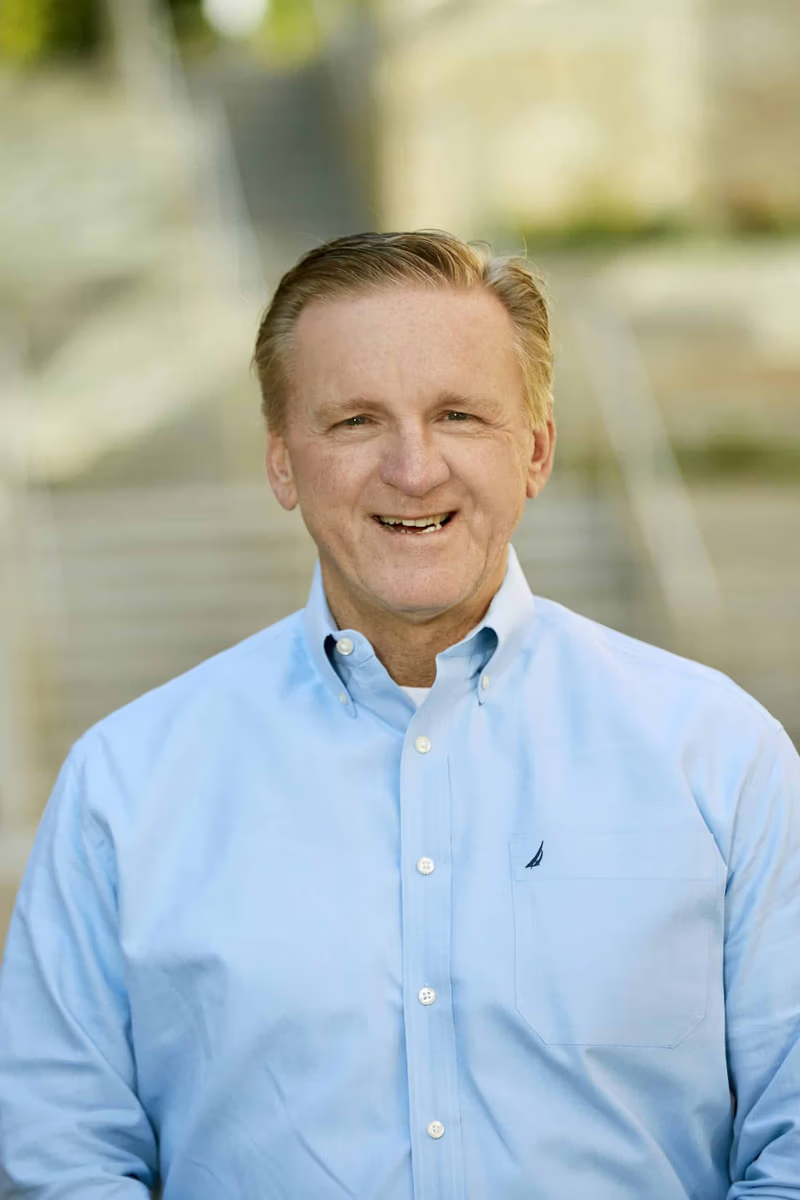
Rick Maner, Chief Financial Officer
Rick brings over 30 years of financial management experience, mostly focused on financial services industry. Rick oversees all of the accounting operations including financial reporting, cash planning, and managing external audit relationships and the Funds tax reporting.